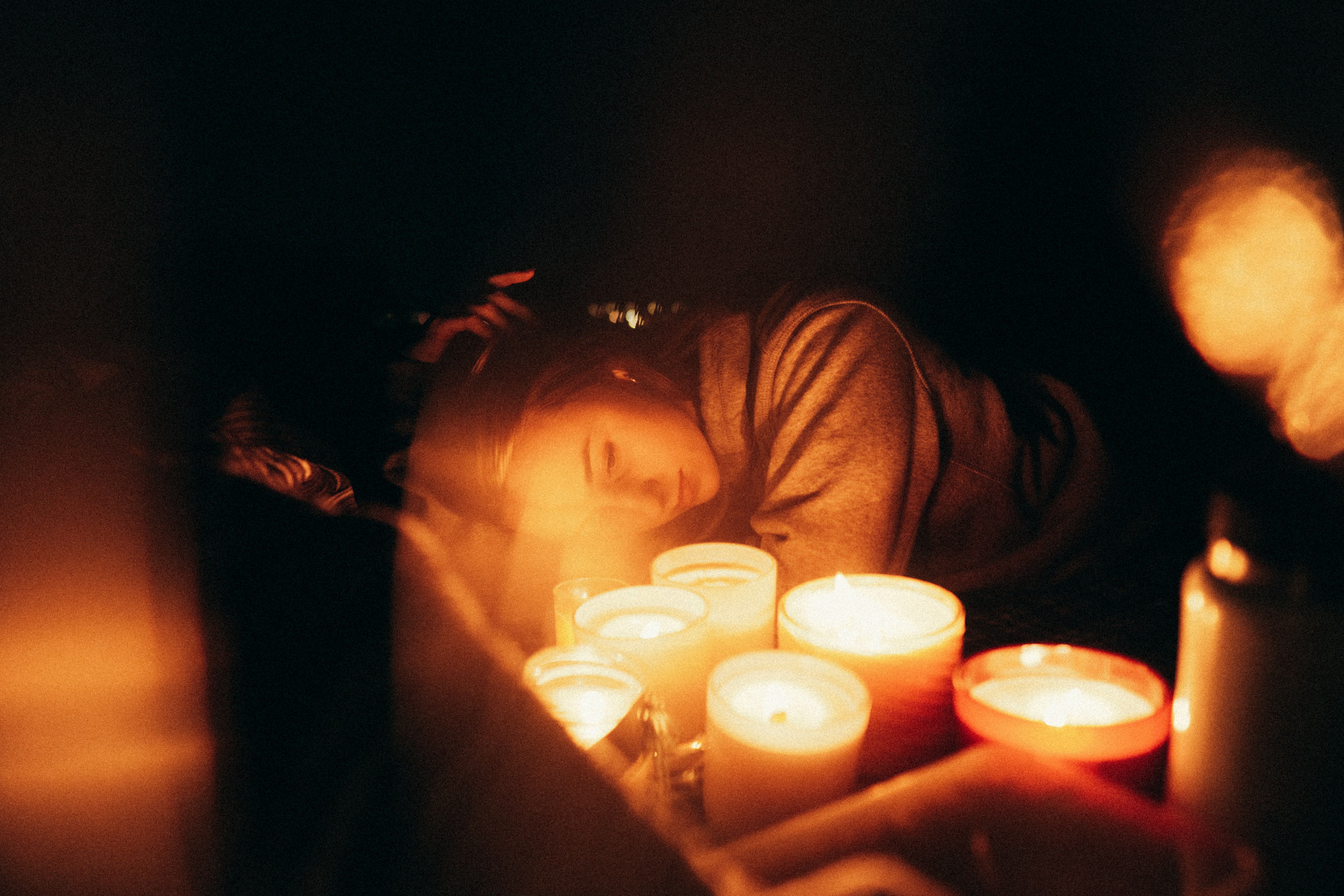
A guide to choosing home fragrance by room, hour, and mood, with notes on candlelight, scent memory, and the quiet theatre of atmosphere. A candle reveals itself slowly. Not in the cold wax and not when the match is struck — it reveals itself after the flame has settled. It is in the weight of the air, in the hour of the day, in the way a room begins to feel more like itself. This is the real work of home fragrance. Scent is never meant to be experienced in isolation. It changes and evolves by context: by warm light or wet weather, by the hush before guests arrive, by steam on a mirror, by the last lamp left on in a bedroom. A fragrance that feels beautiful in one room may feel too insistent in another. Something quiet on its own may become unforgettable when it appears and disappears as you pass. A good candle does not simply perfume a room. It edits it.
A room, at the right hour
An entrance after rain needs composure. The door opens. The air is cooler for a moment. Someone steps in from outside, carrying the weather with them. This is not the place for sweetness or theatre. The fragrance should feel almost architectural: mineral woods, violet leaf, water-dark facets, a shadow of oud. Something that makes arrival feel considered without making it feel announced. By late afternoon, a living room can take more texture. The day is still awake, but the light has begun to soften. The room has gathered its evidence: a book left open, flowers losing their posture, glass catching the last brightness at the edge. Here, wood and florals work beautifully together. Cedarwood gives the room structure. Rose softens it. Ambered woods and dry petals add warmth without turning the air heavy.
After a bath, clarity matters.
The mirror is still faintly fogged. Stone, tile, water, and steam make scent feel more immediate. This is where mineral woods, green facets, aquatic notes, and soft oud can bring polish without becoming sterile. The effect should not be “scented bathroom.” It should feel like clean air moving through a private bathhouse.
Dinner has its own atmosphere.
Food, flowers, conversation, heat from the kitchen fill up the room before the candle is even lit. A fragrance should understand that. Before guests arrive, it can warm the space and soften its edges. During the meal, restraint is usually better. After dinner, when the table has loosened and the evening has dropped into a slower register, richer notes may return: saffron, amberwood, jasmine, resin, woods with a little shadow.
Past midnight, the bedroom prefers suggestion.
Not absence. Not coldness. Just enough presence to make the room feel held. Sandalwood, pink pepper, dry spice, soft amber: notes that stay close rather than travel too far. The best late-night fragrance feels almost private, as though it belongs to the room only after the day has been put away.
Candlelight is part of the fragrance
A candle is not only scent. It is light, object, and ritual.
This is what separates it from a spray, a diffuser, or flowers placed in a vase. A candle changes the room visually before it changes it aromatically. It gives the eye somewhere small to rest. It warms the surfaces around it. It makes ordinary objects appear more considered. Placement matters, but not in the way styling often suggests. The flame belongs where it can be caught in passing, not where it has been placed to be studied. It should appear at the edge of attention, beside the life of the room, close enough to alter the atmosphere without asking to become the centre of it. A candle should never look overly arranged. It should feel as though the room had been waiting for that small point of light.
What remains
Home fragrance becomes powerful through repetition, like a refrain heard often enough to become inseparable from a certain time and place.
And with repetition comes recognition. A candle lit in the same room, at the same hour, begins to attach itself to the room. Eventually, the scent becomes less like a product and more like a signal. Guests remember it before they can name it. You begin to associate it with a season, a dinner, a person, a version of yourself.
This is the strange permanence of something designed to burn.
The wax lowers. The flame disappears. But the memory of the room remains: the entrance after rain, the living room at dusk, the table after dinner, the bedroom at the end of the day.
Choose the candle for the room it will hold.
Choose it for the hour it will alter.
Choose it for the atmosphere you want to leave behind.